SYNOPSIS
After hearing its grandmother’s stories about the sea, a little red fish decides to leave and find the ocean for itself.
It dreams of endless water, distant waves, and a world larger than the small pool it has always known.
But the little fish does not know that there is no path to the sea.
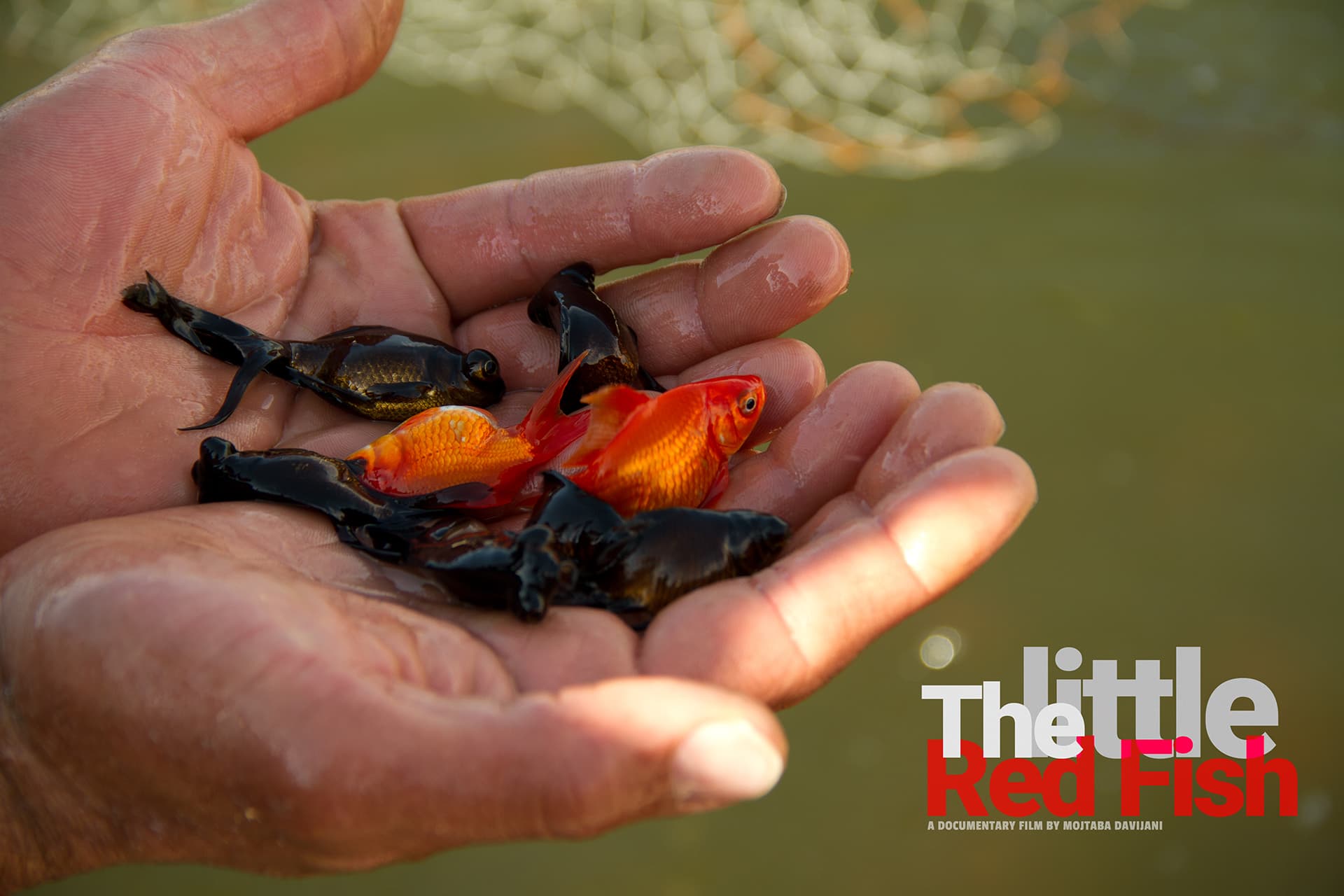
This film tells the story of a small red fish whose heart longed for the ocean, but whose journey leads instead to the Nowruz goldfish market, where thousands of red fish are taken every year to the Haft-Seen table — the ancient table of spring and the new year across the Iranian plateau.
Inside a small glass bowl, the little red fish becomes part of the celebration of life.
Original title
The Little Red Fish
Country
Iran
Length
30min - 50 min
Original language
Persian
Produced by
Mojtaba Davijani
Edit
Mojtaba Davijani - Arash Rakhsha
With the support of
Hadi Rais
Format
2.0, 24 fps
Shooting format
Digital 2K/Color
Screen ratio
16:9
Play Video
From The Little Black Fish to The Little Red Fish
The Narrative of a Hero Across Half a Century
Process of Making the Film
The Little Red Fish began in 2012 as a personal independent project that I decided to produce with my own budget.
The filming process took nearly six months. Most of the film was shot by myself. Sometimes my friend Reza Heydar helped me during filming, and occasionally my brother joined the production, but overall the film was made almost entirely as a one-person project.
Since the project was completely self-financed, I had to continue all the post-production stages with very limited resources. Editing, sound design, and the sand animation were developed gradually over almost two years.
The long process of making the film became part of the film itself — a slow and patient journey, much like the little red fish searching for the sea.
Play Video
Where The Little Red Fish Came From
The idea for The Little Red Fish began many years ago with a memory from childhood.
When I was six or seven years old, I used to visit my grandmother’s house, where there was a small pond full of goldfish. One day I tried to catch one of them. The floor around the pond was covered with algae and was very slippery. I fell and hit my head against the edge of the pool, leaving a deep cut on my forehead.
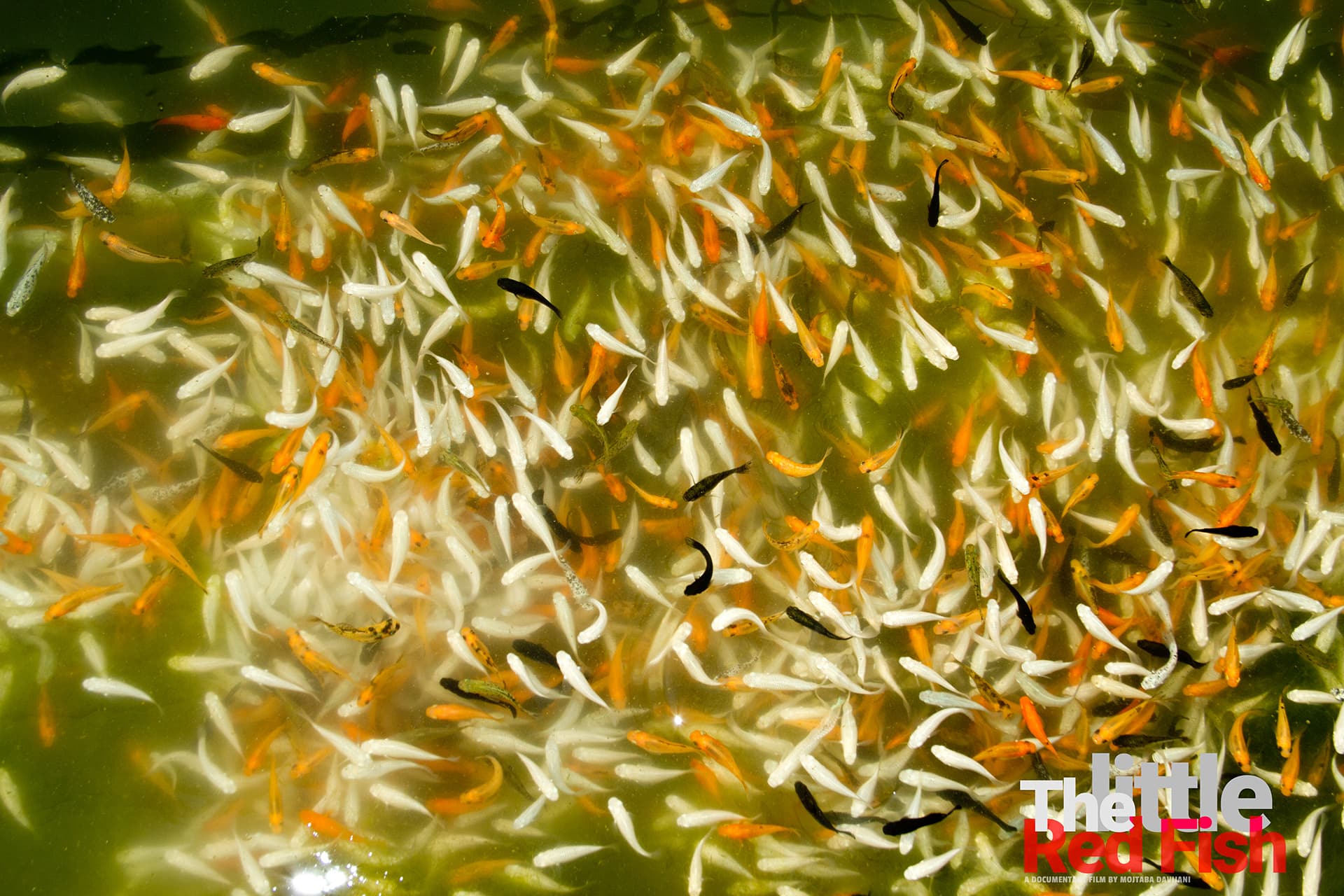
Years later, on the days before Nowruz, I saw thousands of red fish being sold in the streets and markets of Iran. What shocked me was not the number of fish, but their silence. Unlike the fish I remembered from childhood, these fish no longer struggled to escape. They waited quietly for their turn to be caught, sold, and placed inside small glass bowls.
That image stayed with me for years.
At the same time, I kept thinking about The Little Black Fish by Samad Behrangi — a story that had once symbolized courage, rebellion, and the dream of reaching the sea. In Behrangi’s story, the little black fish leaves the safety of the stream to discover a larger world and becomes a heroic figure for generations of Iranians.
But fifty years later, I began asking myself:
What happened to that dream?
What became of that heroic idealism?
The Little Red Fish was born from this question.
The film is not only about goldfish. It is about a generation that still dreams of the sea, while slowly learning that there may no longer be a path leading to it.
Play Video
Director’s Statement
From The Little Black Fish to The Little Red Fish
For me, The Little Red Fish began with a question about the meaning of a hero.
Many years ago, before the 1979 Iranian Revolution, Samad Behrangi wrote The Little Black Fish. In his story, the little black fish leaves the stream in search of the sea. It becomes a symbol of courage, resistance, sacrifice, and idealism. I believe that when Samad Behrangi wrote that story for children, he was imagining the future generation of Iran — perhaps even dreaming about a generation like ours.
But many years passed between the day Samad wrote that story and the day I made this film.
During those years, Iran experienced a revolution, the Iran-Iraq war, and decades of political and civil struggles. Entire generations grew up inside these historical transformations. My film is a narration born after all of these events. In many ways, the distance between The Little Black Fish and The Little Red Fish is the distance between two different historical moments, two generations, and two different understandings of heroism.
Samad’s little black fish fights to reach the sea.
My little red fish still dreams of the sea, but no longer knows whether a path to it exists.
In the Nowruz markets, I saw thousands of little red fish waiting silently inside plastic containers. What shocked me was not their death, but their surrender. They no longer tried to escape. They calmly waited for their turn, indifferent to being caught first or last.
At that moment, I realized that my film was not simply about goldfish or the Nowruz market. The little red fish had become a metaphor for today’s human condition — especially for a younger generation growing up in a complicated and exhausting world, where survival slowly replaces idealism.
This film is my attempt to understand what happened to that heroic imagination over time. What remains of the dream of reaching the sea after years of exhaustion, disappointment, fear, and waiting?
The film moves between allegory and reality, between childhood memory and documentary observation. The sand animation at the beginning evokes the world of old tales and collective dreams, while the documentary images confront us with the reality of contemporary life.
For me, the little red fish became the hero of our modern world.
Perhaps the tragedy of our time is not that the dream of the sea disappeared, but that the path toward it slowly vanished.
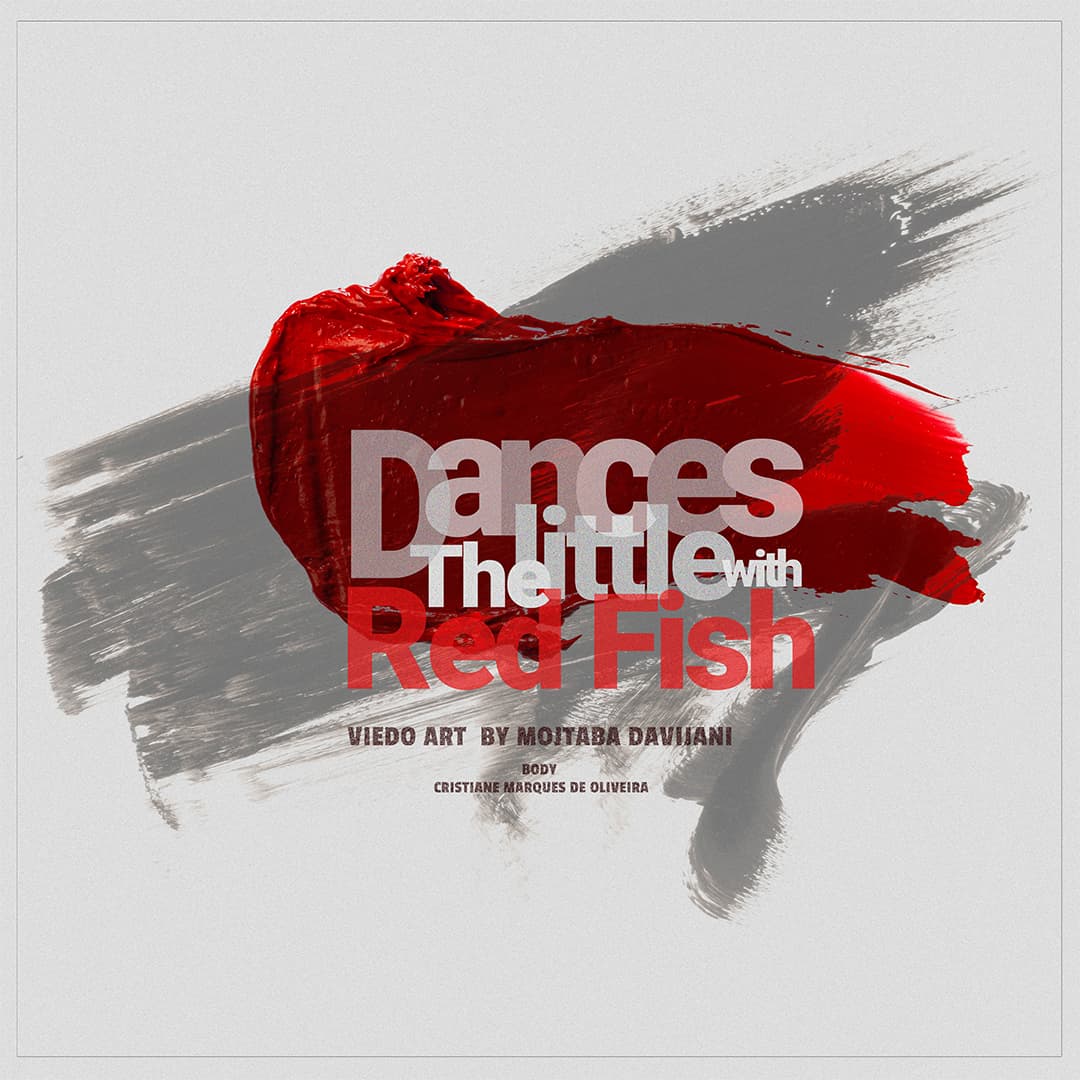
Created in 2024, Dance with The Little Red Fish continues the world of The Little Red Fish through the language of the body.
In this video art installation, the little red fish is no longer represented through image alone, but through human movement itself. The performer’s body becomes a translation of the fish — suspended between the desire to escape and the impossibility of liberation.
While the earlier film was rooted in documentary observation, this work moves toward a more abstract and physical form. Here, the body replaces water, and movement replaces narrative. Motion no longer leads toward freedom, but toward repetition, exhaustion, and the continuous return to the same condition.
The little red fish survives here as a human gesture still dreaming of the sea.